


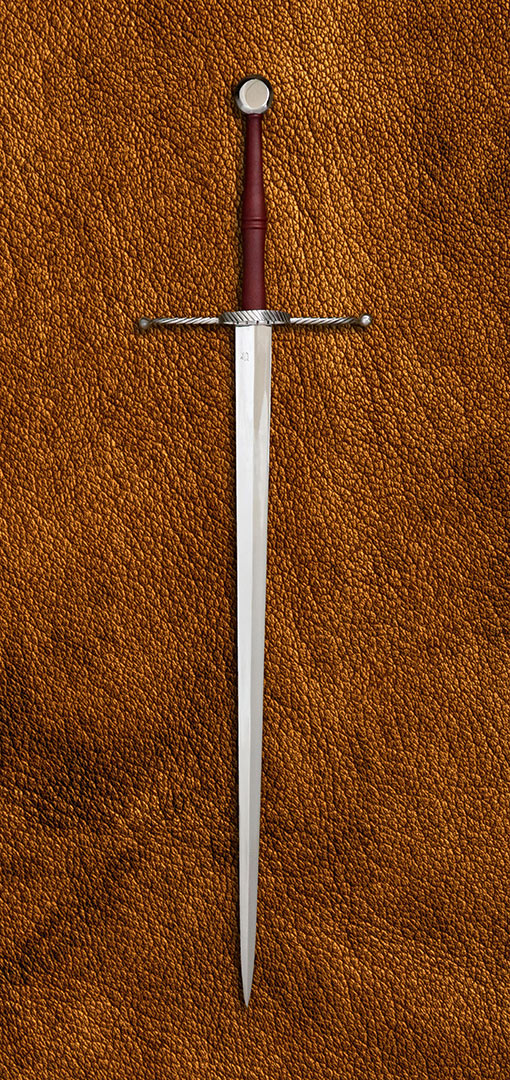
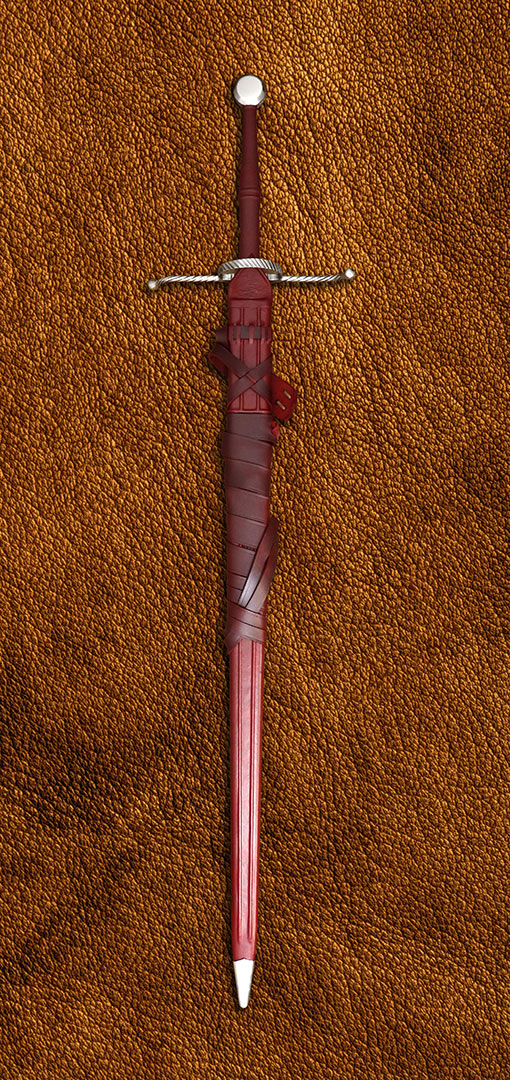
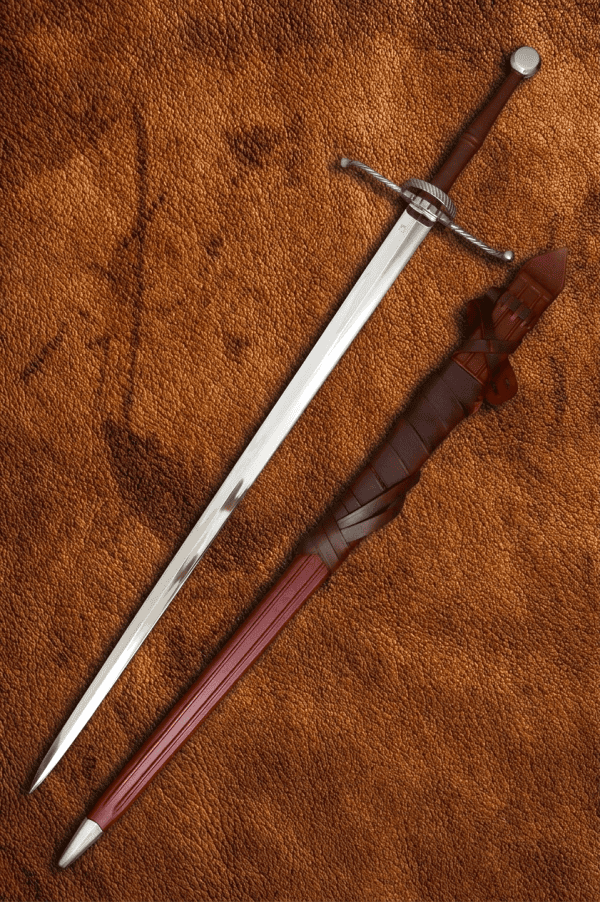
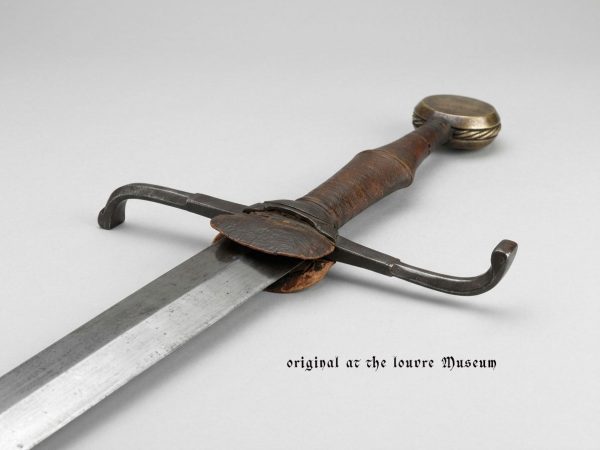
The German longsword (1337)
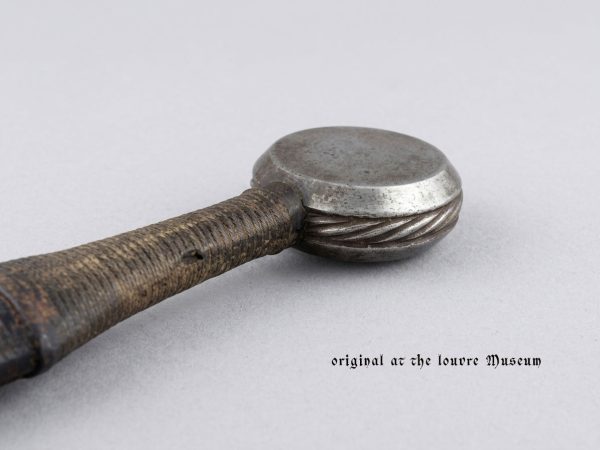
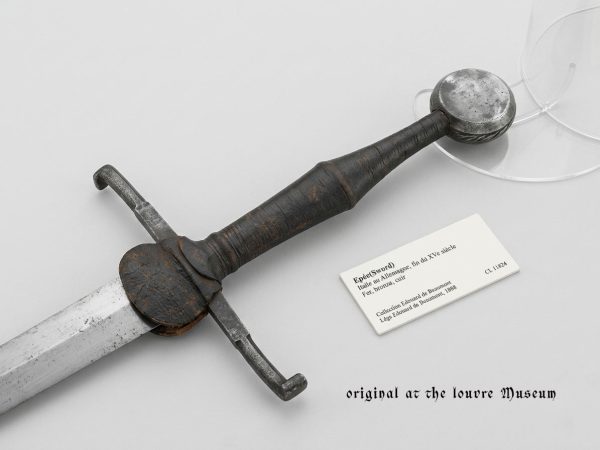
Late 15th century – German. Inspired by the original currently on display at the Louvre Museum in Paris. Type XVIIIa – XVIIIb.
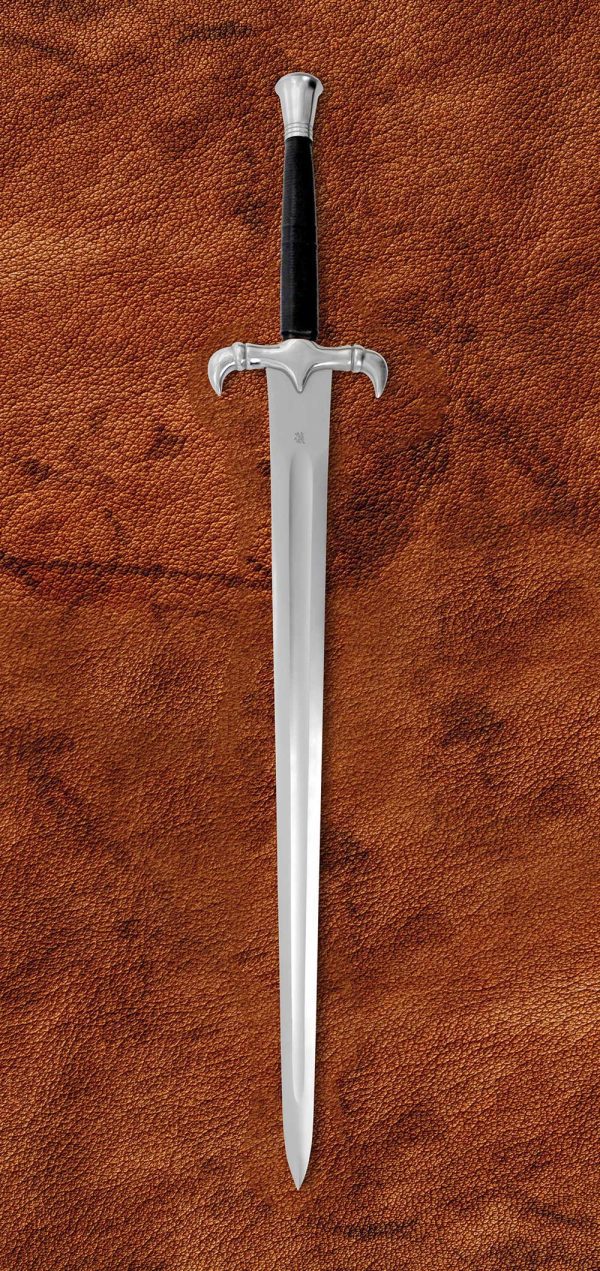
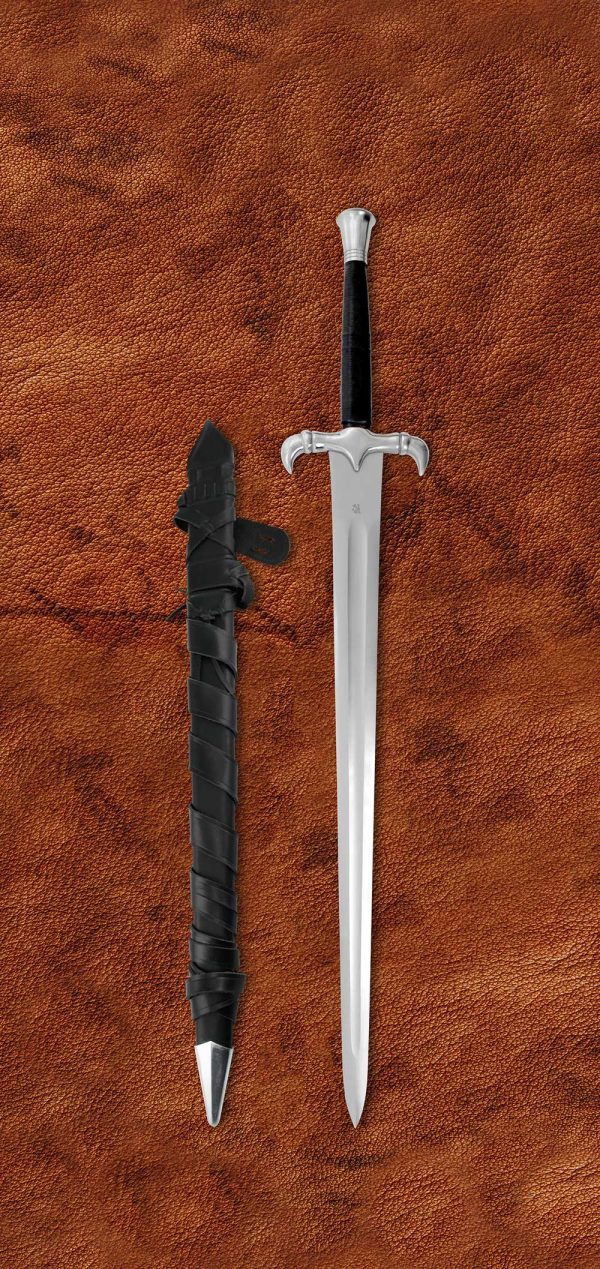
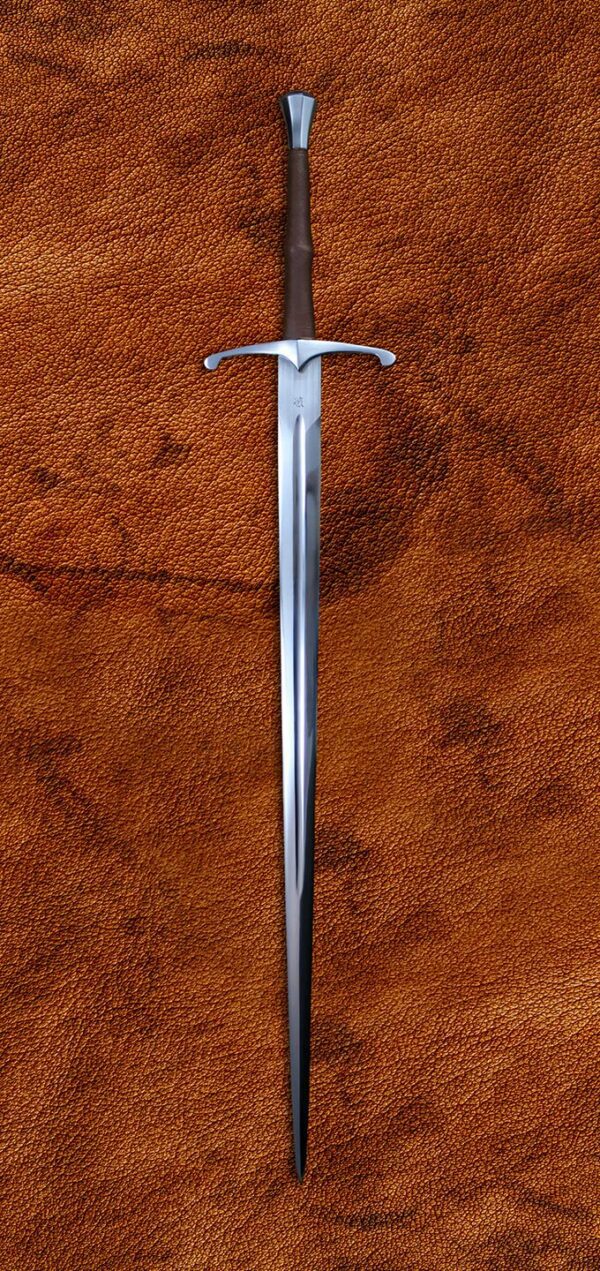
The German Longsword is our staff’s top pick, not only for its elegance and simplicity but also for its superb handling characteristics. This medieval longsword is light, responsive, and very well balanced.
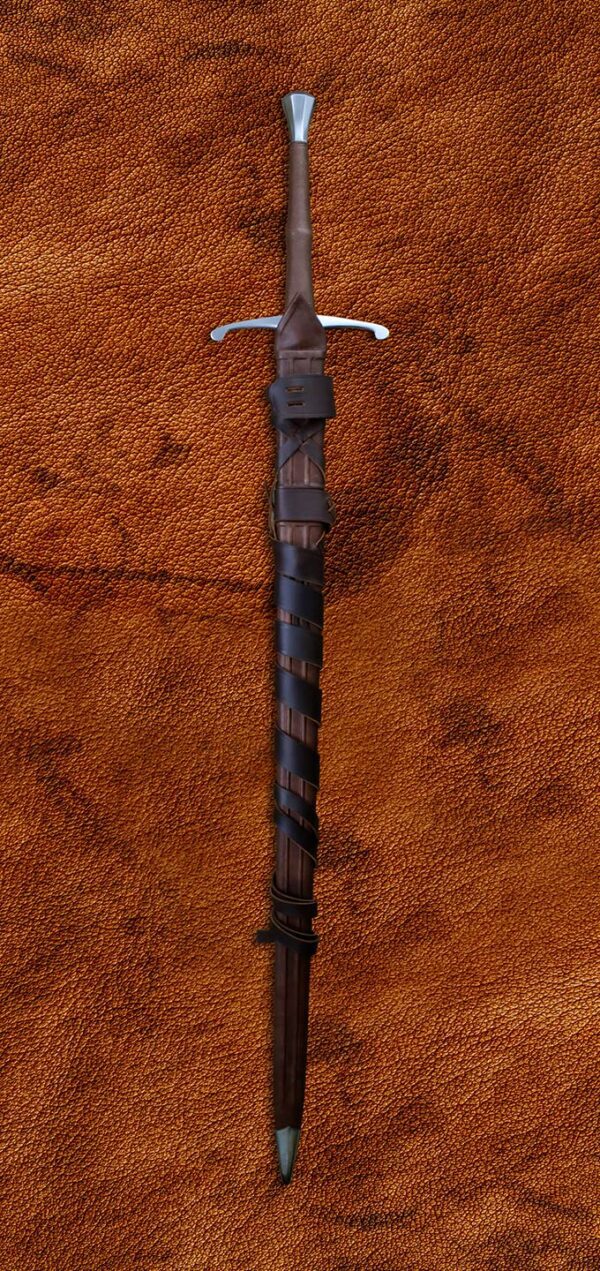
Authentically crafted from the original at the Landesmuseum in Zurich, the German two‑handed Gothic longsword reflects the skill and craftsmanship of the late Middle Ages. Elegant, resilient, and reliable, this two‑handed German sword is an heirloom‑quality medieval weapon. Skillfully engineered and individually crafted, this two‑handed medieval sword will appeal to even the most discriminating collector.
SPECIFICATIONS:
Blade: 5160 High Carbon Steel
Total length: 51″ (129 cm)
Blade length: 39″ (99 cm)
Blade Width : 1.846″ (46.9mm)
Weight: 3lbs 6oz (1.65 Kilos)
USD690.00 USD850.00Price range: USD690.00 through USD850.00

Late 15th century – German. inspired by the original currently on display at the Louvre Museum, Paris.
Type XVIIIa – XVIIIb
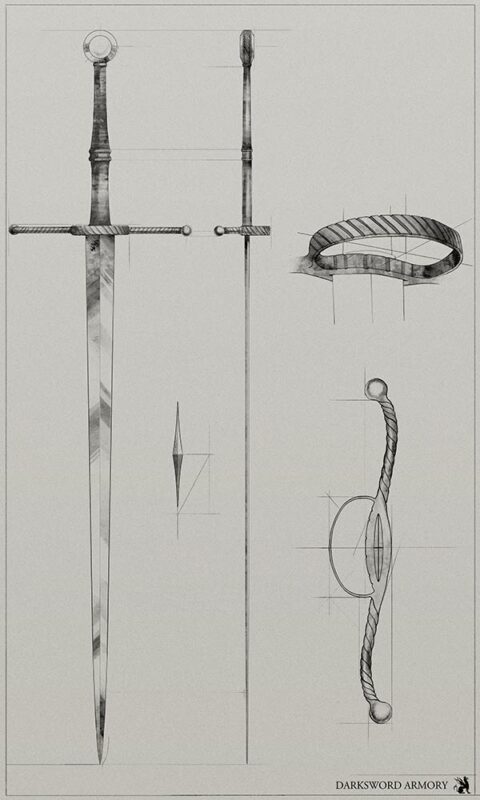
Grounded in historical accuracy, the German longsword captures the elegant and aesthetic of late medieval Europe. This exceptional weapon draws direct inspiration from a famous 15th-century German original. Long admired by historians and sword enthusiasts during its time on display at the Musée de Cluny, the sword has since found its home in the collections of the Louvre Museum.
Classified as an Oakeshott Type XVIIIa, the German longsword represents the pinnacle of late medieval design; when swords evolved to counter increasingly sophisticated plate armor.
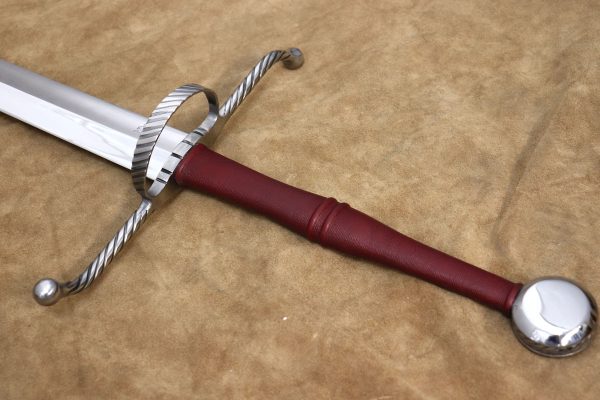
The blade features a pronounced hollow ground diamond cross-section, reducing weight from the blade while maintaining a rigid, devastatingly stiff point. The result is a nimble yet authoritative blade that transitions effortlessly between powerful cuts and precise thrusts.
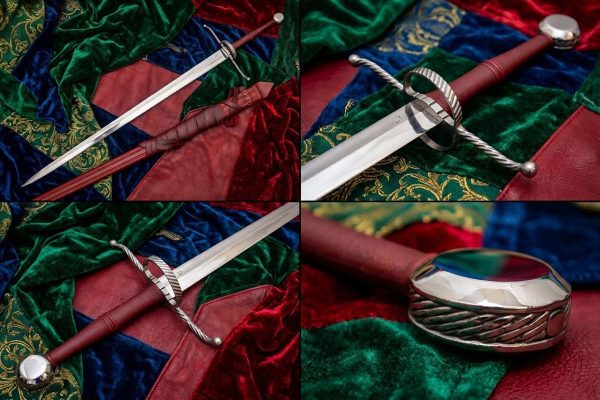
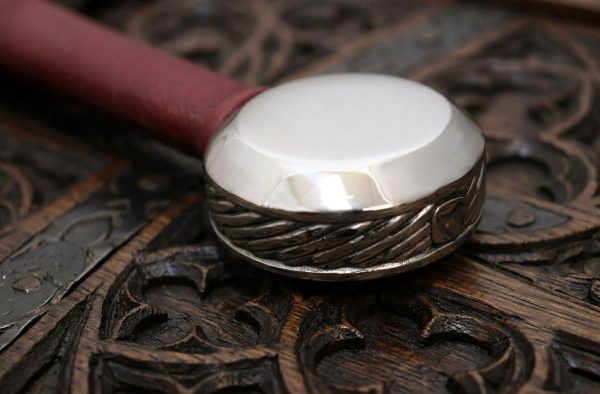
The cross guard features elegantly twisted quillons that mimic the complex wire-work and architectural tracery of the late Medieval period. A wheel pommel anchors the weapon. Like the antique, the perimeter is meticulously detailed with a carved rope motif, contrasting beautifully against the polished, smooth faces of the pommel assembly. , the elongated two-handed grip features a subtle central riser, offering an ergonomic and secure hold for fluid transitions. The simple, yet elegant geometry of the sword reflects the Gothic artistic revival that not only inspired blade smiths and armorers but also architects and painters of the period.
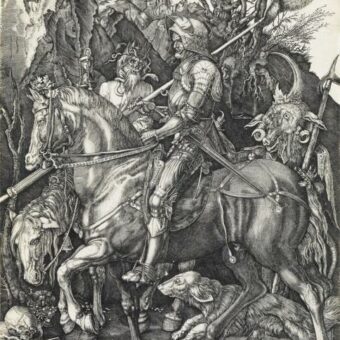
This longswords, classified as type XVIII b were exclusively used by the elite aristocracy, especially in Germany. Despite their clean and straight forward design, Type XVIII b swords were beyond the reach of the common fighter or hired mercenary. The owner of such a sword would be a man of great wealth such as a knight owning a considerably large land or a baron. Many paintings, wood cuts and other artwork of the 15th and 16th century, such as Albrecht Durer’s “The Knight and the Devil”, illustrate important noble figures with type XVIII b swords by their side.
As Oakeshott remarks in “The Sword in the age of Chivalry”
 There are many of these swords, particularly in German collections, and many are to be seen in art, particularly German paintings of the period 1450-1520. Durer shows many examples which are well-known. The finest survivor of the type – indeed, perhaps the most lovely sword of any period or place – is in the Bareische National Museum in Munich. Not only has this sword absolute perfection of line and proportion, but its preservation is perfect, and the decoration of grip, pommel and cross is restrained and beautiful, admirably suited to the hilt it adorns.
The sword is a very responsive sword that feels ‘alive’ and light in the hand. Easily wield-able even in novice hands, the Gothic sword’s characteristics make it a medieval weapon of choice for all collectors. The sword is perfectly balance for swift movement and powerful delivery in both cut and thrust.
SPECIFICATIONS:
Blade: 5160 High Carbon Steel
Total length: 51″ (129 cm)
Blade length: 39″ (99 cm)
Blade Width : 1.846″ (46.9mm)
Weight: 3lbs 6oz (1.65 Kilos)
| Package: | Blunt blade & Scabbard : $690.00, Sharpened blade & Scabbard : $725.00, Blunt blade, Scabbard & Interlaced Sword Belt : $815.00, Sharpened blade, Scabbard & Interlaced Sword Belt : $850.00 |
|---|
Be the first to review “The German longsword (1337)”
Related products
customizable
USD545.00 USD700.00Price range: USD545.00 through USD700.00
This product has multiple variants. The options may be chosen on the product page
customizable
USD495.00 USD650.00Price range: USD495.00 through USD650.00
This product has multiple variants. The options may be chosen on the product page
customizable
USD260.00 USD275.00Price range: USD260.00 through USD275.00
This product has multiple variants. The options may be chosen on the product page
Broadsword
USD630.00 USD790.00Price range: USD630.00 through USD790.00
This product has multiple variants. The options may be chosen on the product page
customizable
USD260.00 USD275.00Price range: USD260.00 through USD275.00
This product has multiple variants. The options may be chosen on the product page
customizable
USD810.00 USD970.00Price range: USD810.00 through USD970.00
This product has multiple variants. The options may be chosen on the product page
Broadsword
USD630.00 USD790.00Price range: USD630.00 through USD790.00
This product has multiple variants. The options may be chosen on the product page
Broadsword
USD625.00 USD785.00Price range: USD625.00 through USD785.00
This product has multiple variants. The options may be chosen on the product page
customizable
USD260.00 USD275.00Price range: USD260.00 through USD275.00
This product has multiple variants. The options may be chosen on the product page
customizable
USD650.00 USD810.00Price range: USD650.00 through USD810.00
This product has multiple variants. The options may be chosen on the product page
×
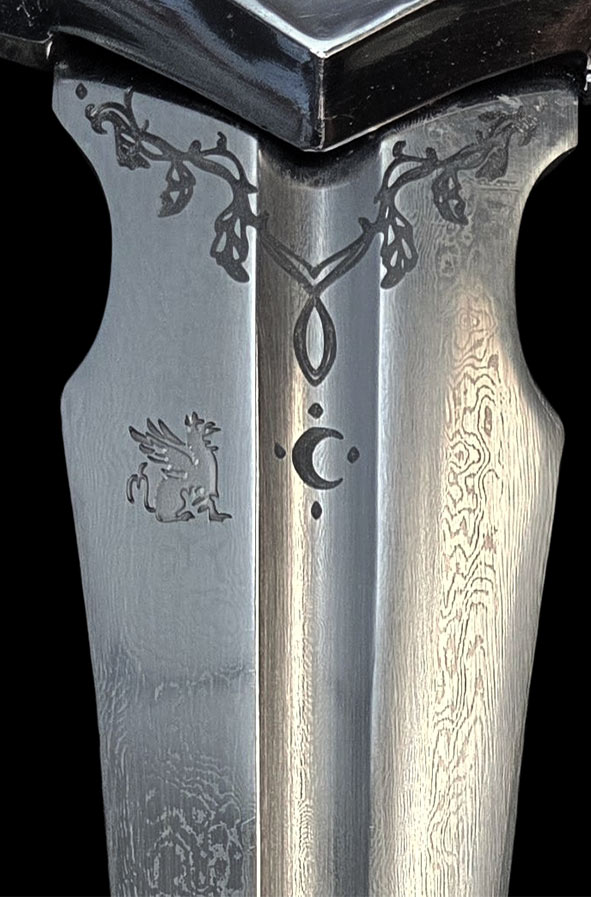
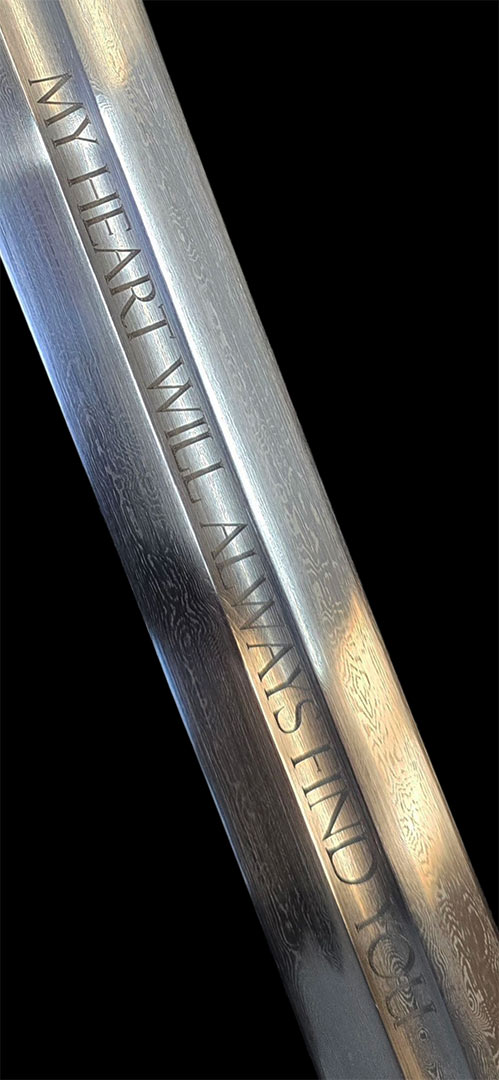
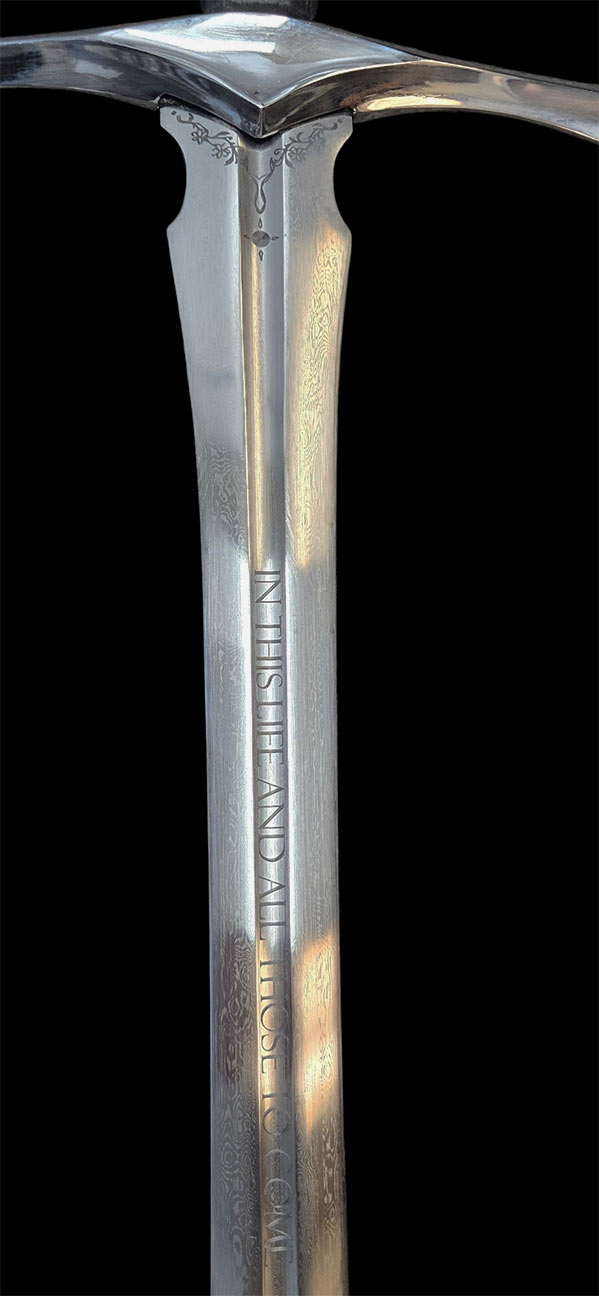
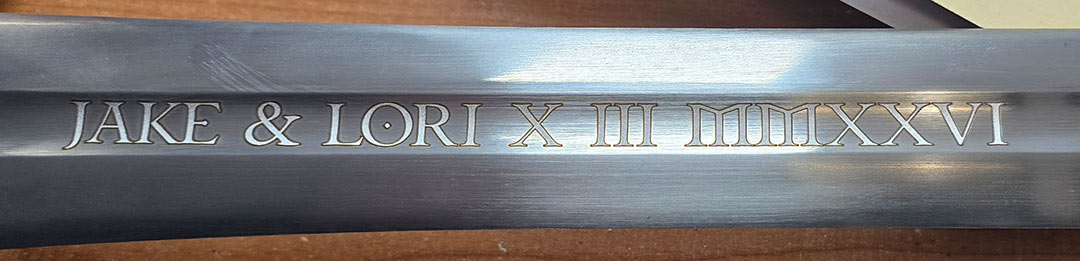
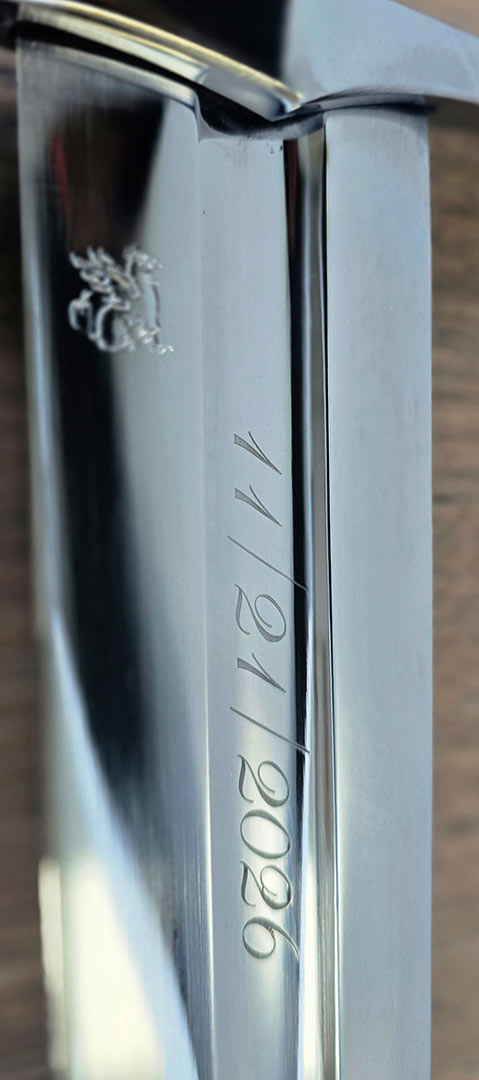
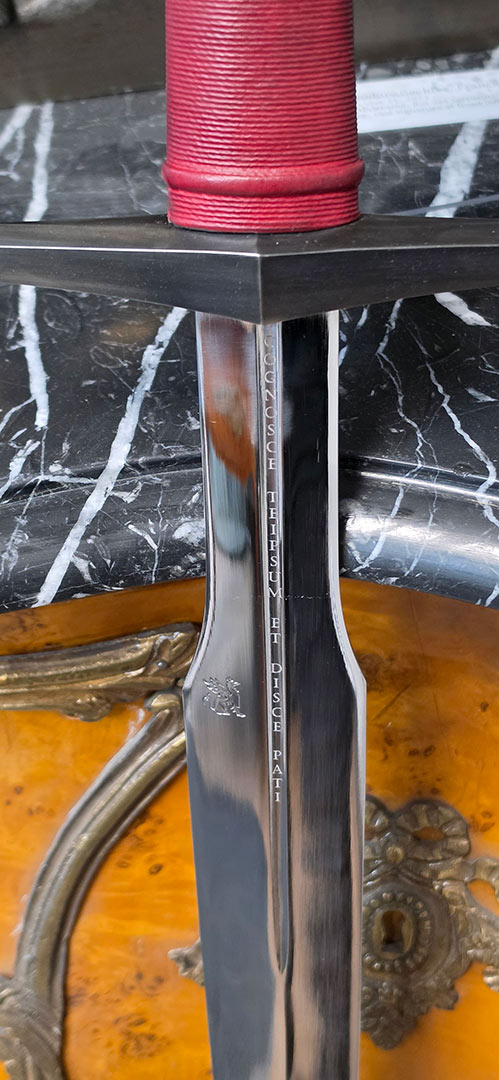
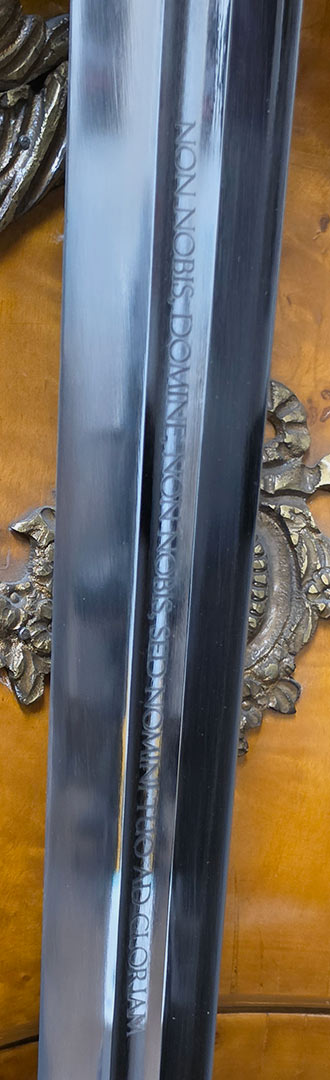
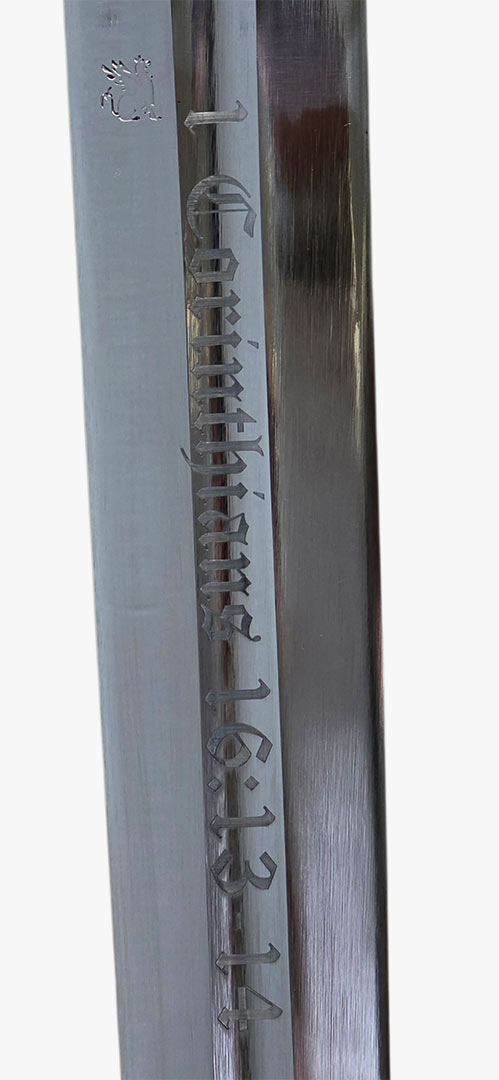
Engraving Guide
Engraving Tiers & Pricing
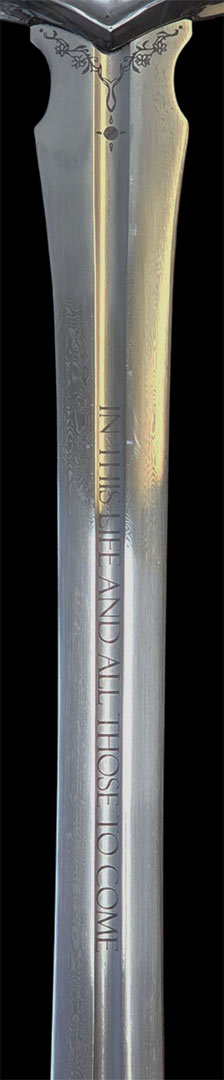
– Extra-Small (up to 25 mm / up to 1.50″): Perfect for initials or a single symbol — $40 one side
– Small (up to 76 mm / up to 3.00″): Ideal for names, initials, dates or logo — $60 one side
– Normal (up to 165 mm / up to 6.50″): Suitable for lettering, designs, or combined artwork — $100 one side
– Oversized (over 165 mm / over 6.50″): For designs longer than 165 mm or multiple separate engravings — $160 one side
- DO NOT FORGET TO TELL US THE SIZE OF YOUR ENGRAVING; IF INFORMATION IS LEFT OUT, WE WILL ASSUME YOU WANT THE LARGEST SIZE THAT YOUR TIER ALLOWS
Artwork & File Requirements
- Images: Clean JPEG (solid white/black background) or PNG of only the design.
- Text: Any Microsoft font or free downloadable font.
ANY AND ALL MARKINGS ON YOUR IMAGE WILL BE ENGRAVED, INCLUDING WATERMARKS
Important Policy
Once your design is finalized, we cannot offer refunds on the engraving service. Our lifetime maintenance warranty on the blade still applies.
Every engraving is executed with precision and care to ensure your design looks as exceptional as the blade it’s on.
×
❮
❯
![]()
Reviews
There are no reviews yet.